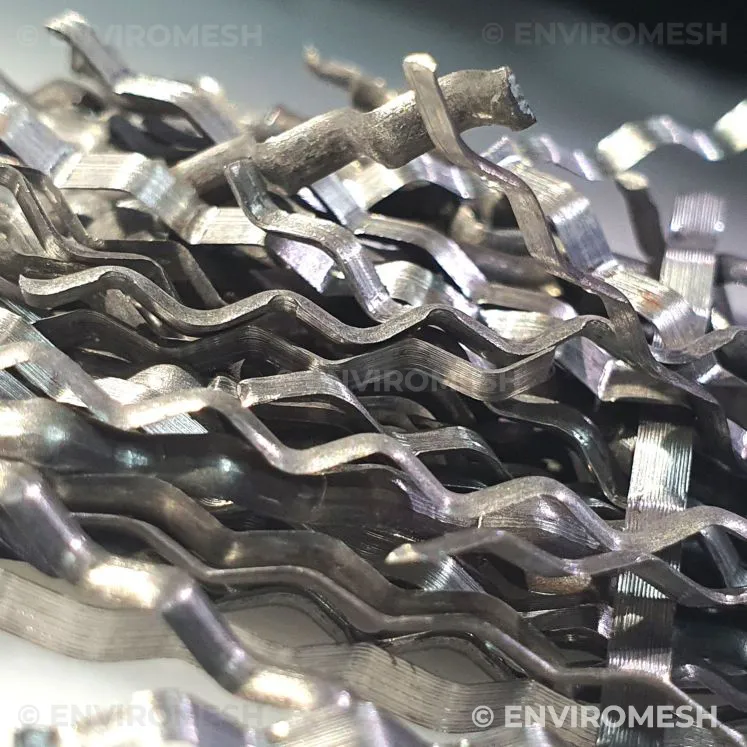
Steel fibres strengthen concrete by resisting tensile cracking. Fibre reinforced concrete has a higher flexural strength than that of unreinforced concrete and concrete reinforced with welded wire fabric. But unlike conventional reinforcement – which strengthens in one or possibly two directions – steel fibres reinforce isotropically, greatly improving the concrete’s resistance to cracking, fragmentation, spalling and fatigue.
The specific effects on matrix mechanical properties greatly depend on the type and quantity of fibre used. Generally speaking, smaller fibres with a high fibre count offer superior first-crack strength and better fatigue endurance. Should a crack open widely, longer fibres with mechanical anchorage mechanisms offer better post-crack performance.
Steel fibre reinforced concrete is a castable or sprayable composite material of hydraulic cements, fine and/or coarse aggregates with discrete steel fibres of rectangular cross-section randomly dispersed throughout the matrix.
Steel fibre reinforced concrete acts as a uniform composite material. Compared to plain or conventionally reinforced concrete, the most immediate differences are improved ductility and post-crack performance. Steel fibres can be used solely or in addition to the conventional steel mesh or rebar depending on applications, design and specifications.
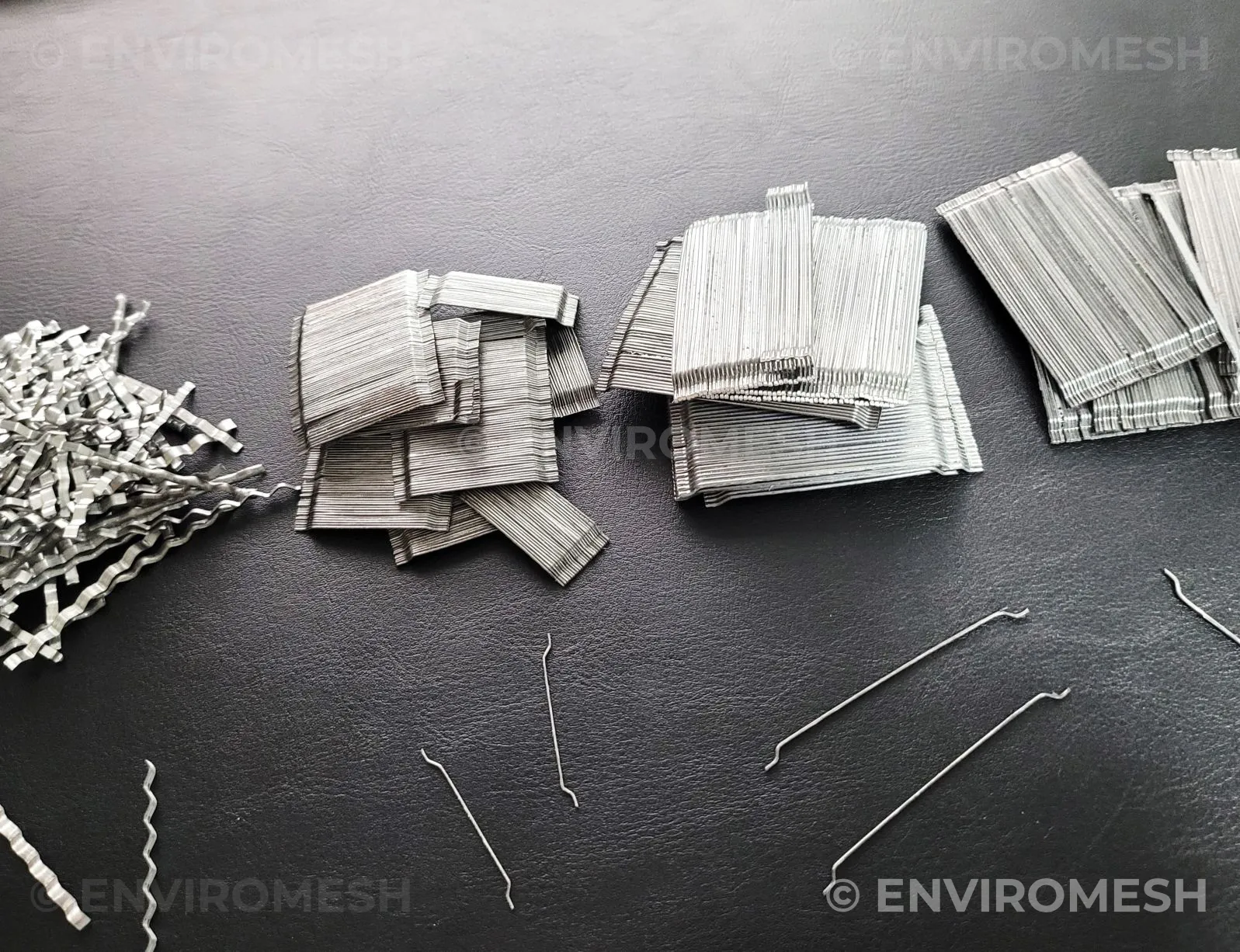
In addition to MSF, Enviromesh also has a range of steel fibres, popularly known as Fibercon. Fibercon steel fibres are widely used in Australian infrastructure projects. Our steel fibres are available in lengths from 38 mm to 50 mm and aspect ratios between 40 and 60. The fibres are manufactured either deformed or hook end and conform to ASTM A-820.
Some of our widely used steel fibres are:
For more information on SFRC and its applications visit www.fibrecon.com.au
In addition to MSF, Enviromesh also has a range of steel fibres, popularly known as Fibercon. Fibercon steel fibres are widely used in Australian infrastructure projects. Our steel fibres are available in lengths from 38 mm to 50 mm and aspect ratios between 40 and 60. The fibres are manufactured either deformed or hook end and conform to ASTM A-820.
Some of our widely used steel fibres are:
For more information on SFRC and its applications visit www.fibrecon.com.au
In concrete applications where synthetic fibres may not meet the structural or performance requirements—such as those involving high loads, impact resistance, or demanding durability conditions—steel fibres offer a reliable alternative. They provide superior tensile strength, crack control, and toughness, making them ideal for heavy-duty and high-stress environments like industrial floors, precast elements, mining structures, and civil infrastructure. By replacing traditional reinforcement or synthetic fibres in such scenarios, steel fibres can enhance overall structural performance, reduce labour and placement time, and deliver long-term durability and cost-efficiency in concrete construction.
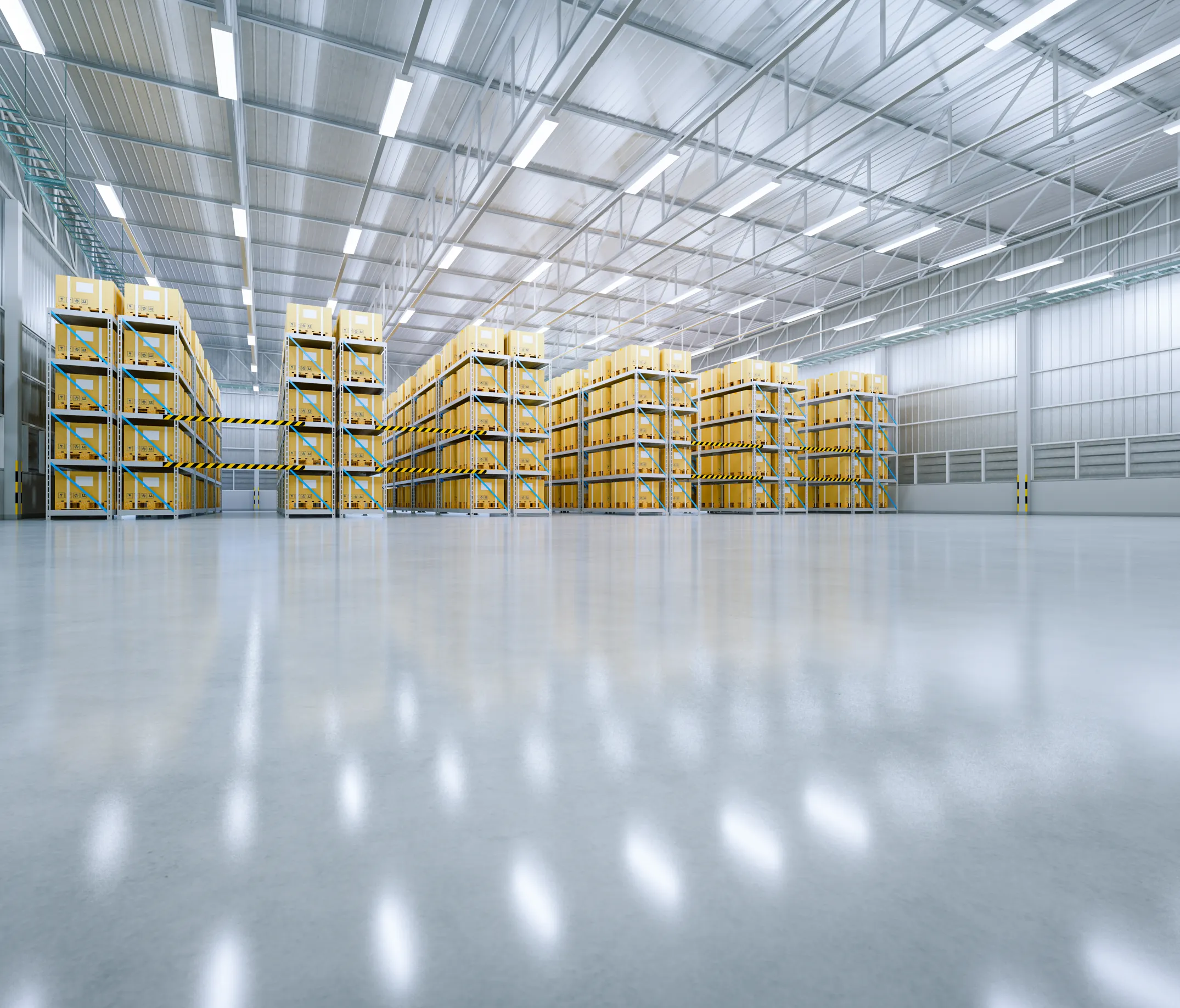
Enhance load-bearing capacity and crack control for heavy-duty floor slabs under forklift and racking loads.
Improve durability and resistance to dynamic loads and abrasive conditions in underground and surface structures.
Increase structural integrity and reduce cracking from thermal and traffic-related stresses.
Provide uniform reinforcement, reduce labour for mesh placement, and improve handling strength of units.
Enhance ductility, toughness, and crack resistance in demanding infrastructure applications.
Offer high fatigue resistance and distribute loads effectively under repeated aircraft movement.
Strengthen against hydrostatic pressure and reduce risk of structural cracking during installation and service.
Improve flexural performance and long-term stability in retaining and support structures.
Increase crack resistance and load distribution for heavy vehicle access points.
Improve impact resistance and reduce cracking from temperature swings and settlement.
Enhance toughness and provide long-lasting performance under multi-directional traffic loads.
Boost tensile strength and control shrinkage cracking, ensuring water-tightness and durability.
Enviromesh Steel Fibres can be used in a wide range of applications. Typically, these fibres are used in:
Enhance load-bearing capacity and crack control for heavy-duty floor slabs under forklift and racking loads.
Improve durability and resistance to dynamic loads and abrasive conditions in underground and surface structures.
Increase structural integrity and reduce cracking from thermal and traffic-related stresses.
Provide uniform reinforcement, reduce labour for mesh placement, and improve handling strength of units.
Enhance ductility, toughness, and crack resistance in demanding infrastructure applications.
Offer high fatigue resistance and distribute loads effectively under repeated aircraft movement.
Strengthen against hydrostatic pressure and reduce risk of structural cracking during installation and service.
Improve flexural performance and long-term stability in retaining and support structures.
Increase crack resistance and load distribution for heavy vehicle access points.
Improve impact resistance and reduce cracking from temperature swings and settlement.
Enhance toughness and provide long-lasting performance under multi-directional traffic loads.
Boost tensile strength and control shrinkage cracking, ensuring water-tightness and durability.
For more information on SFRC and its applications visit www.fibrecon.com.au
Please submit the information below to request the document.